
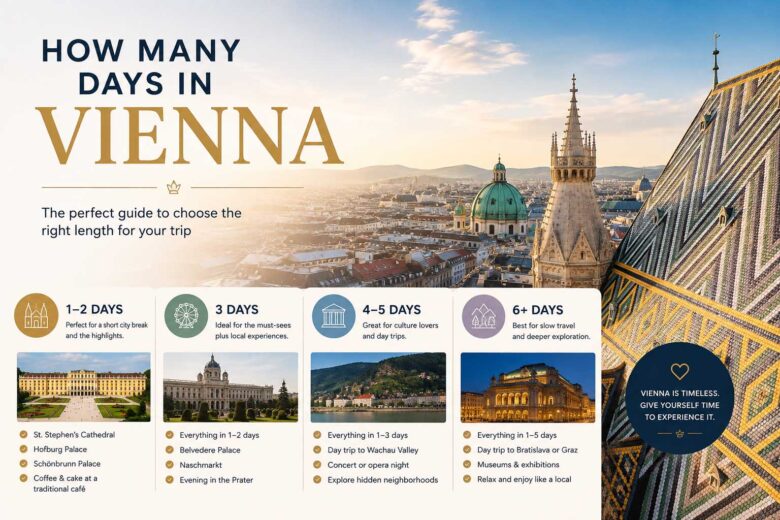
How Many Days in Vienna? A Complete Guide to Planning the Perfect Trip
If you’re wondering how many days in Vienna you should plan, the short answer is three to four days. That gives you enough time to visit the city’s famous palaces, museums, coffee houses, and historic neighborhoods without feeling rushed. However, the ideal length depends on your travel style, interests, and whether you plan to explore nearby destinations.
Vienna is one of Europe’s most elegant capitals. It combines imperial history, world-class art, classical music, and modern city life in a compact, walkable destination. Unlike some large European capitals, many of Vienna’s top attractions sit close together, making sightseeing surprisingly efficient.
This guide explains how many days to spend in Vienna, what you can realistically see with different trip lengths, when to visit, how much to budget, and practical travel tips
How Many Days in Vienna Is Enough?
Most visitors find that three days offers the best balance between sightseeing and relaxation.
Here’s a quick comparison.
| Trip Length | Best For | Highlights |
|---|---|---|
| 2 Days | Weekend city break | Historic center, Schönbrunn Palace, museums |
| 3 Days | First-time visitors | Major attractions plus local cafés and parks |
| 4 Days | Relaxed exploration | Hidden neighborhoods, markets, museums, concerts |
| 5+ Days | Slow travel | Day trips and deeper cultural experiences |
If you’re asking how many days do you need in Vienna, three or four days will satisfy most travelers. Art lovers, history enthusiasts, and classical music fans may appreciate staying longer.
Suggested Vienna Itineraries
2 Days in Vienna
Two days work well if you’re combining Vienna with other European cities.
Day 1
- St. Stephen’s Cathedral
- Graben shopping street
- Hofburg Palace
- Spanish Riding School
- Traditional Viennese café
Day 2
- Schönbrunn Palace
- Palace gardens
- Belvedere Museum
- Evening classical concert
You’ll see the city’s biggest landmarks while keeping a comfortable pace.
3 Days: The Sweet Spot
Three days is the recommendation for most travelers wondering how many days in Vienna is enough.
In addition to the first two days, spend your third day exploring:
- MuseumsQuartier
- Naschmarkt
- Danube Canal
- Vienna State Opera
- Local wine tavern (Heuriger)
This schedule lets you experience both the famous attractions and Vienna’s relaxed atmosphere.
If you’re comparing several European capitals before planning your vacation, guides like how many days in Prague can help you decide how much time each destination deserves.
4 Days for a Relaxed Visit
A fourth day allows you to slow down and discover less crowded places.
Popular choices include:
- Vienna Woods
- Prater amusement park
- Hundertwasser House
- Leopold Museum
- Danube Island
You’ll also have more time to enjoy Vienna’s famous café culture without rushing between attractions.
5 Days or More
Five days or longer works well if you enjoy museums, architecture, music, and day trips.
Popular excursions include:
- Wachau Valley
- Melk Abbey
- Bratislava, Slovakia
- Baden near Vienna
Longer stays also give you flexibility if the weather changes.
Why Three Days Works for Most Travelers
Vienna is compact.
Many attractions sit within walking distance or are connected by an excellent public transportation network.
Unlike cities where sightseeing requires long daily commutes, Vienna allows you to spend more time exploring and less time traveling.
Three days usually gives you enough time to:
- Tour imperial palaces
- Visit famous museums
- Experience Viennese coffee culture
- Attend a classical concert
- Walk through historic streets
- Enjoy local markets
That’s why many travel experts recommend three days as the ideal first visit.
Best Time to Visit Vienna
Your experience changes dramatically depending on the season.
Spring (March to May)
Spring offers mild temperatures and blooming parks.
Why visit:
- Comfortable sightseeing weather
- Fewer crowds than summer
- Outdoor cafés begin reopening
Summer (June to August)
Summer is Vienna’s busiest tourism season.
Pros:
- Long daylight hours
- Outdoor concerts
- Festivals
- Open-air dining
Cons:
- Higher hotel prices
- Larger crowds
- Popular attractions sell out early
Autumn (September to October)
Many experienced travelers consider autumn the perfect season.
Benefits include:
- Pleasant temperatures
- Colorful parks
- Smaller crowds
- Excellent photography conditions
Winter (November to February)
Winter transforms Vienna into a festive destination.
Highlights include:
- Christmas markets
- Ice skating
- Holiday concerts
- Cozy cafés
If your travel dates are flexible, reading about the best time to visit Paris can also help you compare seasonal experiences across European capitals before finalizing your itinerary.
Transportation Around Vienna
Getting around Vienna is simple.
The city’s transportation system includes:
- U-Bahn (subway)
- Trams
- Buses
- Regional trains
A Vienna City Card or public transport pass often saves both time and money if you plan multiple journeys each day.
Walking is also one of the best ways to explore the historic center.
Many of Vienna’s most famous attractions are located within a relatively small area.
Taxis and rideshare services are available, although most visitors rarely need them.
Budgeting for Your Trip
Vienna is generally less expensive than cities like London or Paris, yet it’s still considered a premium European destination.
Here’s a general estimate.
| Travel Style | Daily Budget (USD) |
| Budget | $90–140 |
| Mid-range | $180–300 |
| Luxury | $450+ |
These estimates include accommodation, transportation, food, and sightseeing. Actual costs vary depending on travel season, hotel category, booking time, and personal spending habits.
Ways to reduce expenses include:
- Book accommodations early.
- Purchase attraction passes if visiting several museums.
- Use public transportation instead of taxis.
- Eat lunch at local cafés, where prices are often lower than dinner menus.
- Visit free parks, gardens, and churches throughout the city.
Where to Stay in Vienna
Choosing the right neighborhood can make your trip smoother, especially if you’re trying to maximize your sightseeing time.
Innere Stadt (1st District)
This is Vienna’s historic center and the best choice for first-time visitors.
You’ll be close to:
- St. Stephen’s Cathedral
- Hofburg Palace
- Luxury shopping streets
- Museums
- Restaurants and cafés
Although hotels here are usually more expensive, you’ll save time on transportation.
Leopoldstadt
Located just across the Danube Canal, Leopoldstadt offers quieter streets, larger parks, and generally lower accommodation prices while remaining close to the city center.
It’s a great choice for families and travelers staying four or more days.
Neubau
Known for its creative atmosphere, Neubau features boutique hotels, independent cafés, galleries, and excellent shopping.
This neighborhood suits travelers looking for a more local experience.
Must-Try Viennese Food
Vienna’s culinary scene combines traditional Austrian dishes with modern European influences.
Don’t leave without trying:
- Wiener Schnitzel
- Tafelspitz
- Sachertorte
- Apple Strudel
- Kaiserschmarrn
- Viennese coffee
Many visitors spend hours relaxing in historic coffee houses, which are an attraction in themselves rather than simply places to grab a drink.
Family Travel in Vienna
Vienna is one of Europe’s most family-friendly capitals.
Popular attractions for children include:
- Schönbrunn Zoo
- Prater amusement park
- Natural History Museum
- House of Music
- Danube Island
Public transportation is easy to navigate with children, and many museums offer family-friendly exhibits.
Solo Travel Tips
Solo travelers usually find Vienna welcoming and easy to explore.
Reasons include:
- Excellent public transportation
- Safe neighborhoods
- Walkable city center
- Plenty of guided tours
- Friendly café culture
Whether you’re visiting museums or attending a classical concert, Vienna is comfortable to experience alone.
Packing Tips for Vienna
Packing depends on the season, although a few essentials remain useful year-round.
Bring:
- Comfortable walking shoes
- Lightweight backpack
- Reusable water bottle
- Weatherproof jacket
- Universal power adapter
- Portable charger
If you’re visiting during winter, pack warm layers, gloves, and waterproof footwear.
Spring and autumn travelers should prepare for changing temperatures throughout the day.
Common Mistakes to Avoid
Trying to See Too Much
Although Vienna is compact, museums and palaces deserve time.
Instead of rushing through every attraction, choose a realistic daily schedule.
Skipping Museum Reservations
Popular attractions sometimes require advance booking, especially during holidays and summer.
Planning ahead helps avoid long waits.
Ignoring Café Culture
Vienna’s famous coffee houses are part of the city’s identity.
Rather than treating them as quick stops, allow time to sit, relax, and enjoy the atmosphere.
Staying Too Far Outside the Center
Budget hotels outside the city can seem attractive, but longer commuting times may reduce the amount of sightseeing you can fit into each day.
Frequently Asked Questions
How many days do I need in Vienna?
Most first-time visitors need three days. That provides enough time to explore major attractions, enjoy local cuisine, and experience Vienna’s unique atmosphere without feeling rushed.
Is two days enough?
Yes, if your goal is to see the highlights. You’ll cover the historic center, Schönbrunn Palace, and one or two museums, although you’ll need to prioritize your itinerary.
Is four days too much?
Not at all. Four days allows a slower pace, more museum visits, local neighborhoods, parks, and even an evening concert or wine tavern experience.
Can Vienna be combined with other cities?
Absolutely. Vienna pairs well with nearby destinations like Bratislava, Budapest, and Prague. If you’re comparing European itineraries, guides such as how many days in Amsterdam can help balance your schedule across multiple cities.
Is Vienna expensive?
Vienna is generally more affordable than some Western European capitals, although accommodation in the city center can be costly during peak travel periods.
Comparing Vienna With Other European City Breaks
Vienna fits comfortably into a multi-city itinerary.
Compared with many destinations:
- Vienna generally requires less time than Rome for major sightseeing.
- It offers a more relaxed pace than Paris.
- Museums are easier to navigate due to shorter queues outside peak season.
If you’re deciding between several capitals, reading guides like how many days in Rome or how many days in Paris can help you plan a balanced European vacation.